

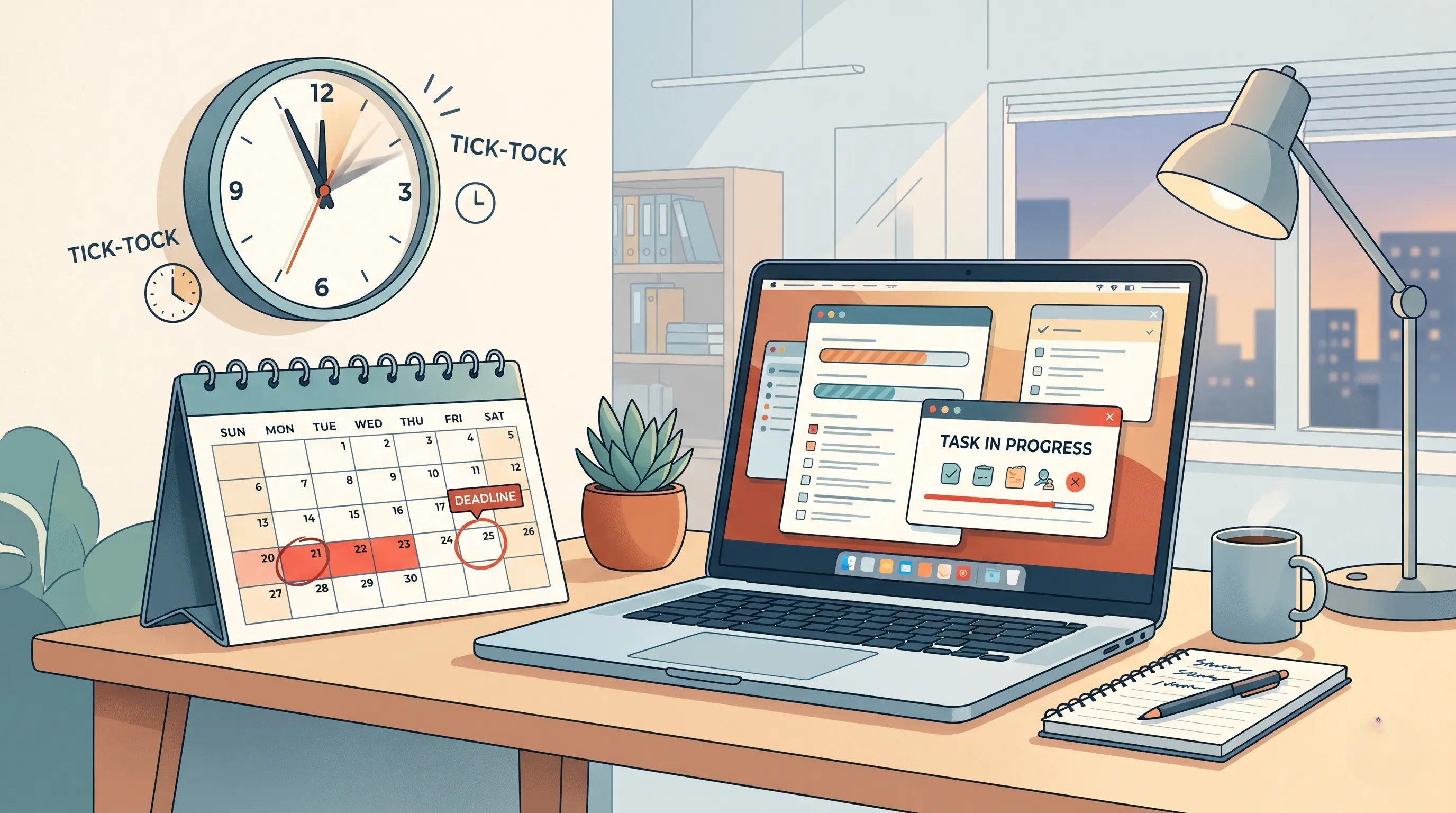
Missed a deadline? Use professional, believable excuses and copy-ready templates to communicate delays clearly and protect trust.
Missing a deadline is stressful, but it does not have to damage your professional reputation. What matters most is how you communicate the delay. Managers and clients usually accept setbacks when updates are early, clear, and paired with a realistic recovery plan.
How to Explain a Missed Deadline Professionally
- Communicate early. Flag risk before the deadline passes whenever possible.
- Name the blocker briefly. Share one clear reason without over-detailing.
- Offer a revised delivery time. Pair your update with an exact next milestone.
mail Deadline Extension Message Template
Hi [Name], quick update on [Project]. I am facing [brief blocker], which will affect the original deadline. I can deliver a complete version by [new time/date]. If useful, I can share a progress draft by [earlier checkpoint].
Best Excuses for Missing Deadlines
Use these professional excuses for late work as communication frameworks, not scripts to overuse. Keep them close to the truth and focus on resolution.
Workload and priority issues
- A sudden executive priority required immediate reallocation of your time.
- Final quality checks uncovered gaps that need verification before submission.
- Scope expanded beyond the original estimate after new requirements were added.
- Final sign-off is pending from a required internal stakeholder.
- Critical upstream deliverables from another team arrived late.
Technical excuses for missing deadlines
- Server or platform outage blocked access to required systems.
- File corruption or version conflict required restoration from backups.
- Internet or VPN disruption prevented secure access to project data.
- Hardware failure required IT intervention and temporary downtime.
- Security patch or forced update interrupted active work sessions.
Personal or family disruptions
- Family medical emergency required immediate attention.
- Urgent home issue (plumbing, safety, or power) caused temporary offline time.
- Unexpected childcare gap affected working hours.
- Time-sensitive legal or documentation matter required same-day handling.
- Transport breakdown disrupted your ability to reach work systems.
Health-related delays
- Sudden illness reduced your ability to complete deep-focus work.
- Migraine or severe symptoms made screen work temporarily unsafe.
- Urgent medical or dental appointment shifted your working window.
- Medication side effects impacted concentration and output quality.
- Short burnout reset needed to return at full performance.
Communication and coordination issues
- Ambiguity in the brief required clarification before execution.
- Final specifications or stakeholder inputs arrived later than expected.
- Conflicting instructions required alignment before completion.
- Critical notification from project tools failed to trigger on time.
- Dependency handoff from another team missed its checkpoint.
forum Two Professional Late-Work Examples
Quality-first update: "I am finalizing the draft, but I need one additional review cycle to validate key data points. I can deliver a reliable final version by 4 PM tomorrow."
Technical issue update: "A system outage blocked access to the reporting database this afternoon. IT has an active ticket, and I expect to deliver by end of day once access is restored."
Tips for Handling Missed Deadlines Without Losing Trust
- Apologize once, then pivot to your revised plan.
- Be honest and concise rather than defensive.
- Break delivery into checkpoints when full completion is delayed.
- Document blockers so repeat issues can be prevented.
Still struggling to write the right delay message?
Generate a concise, professional late-work email for your exact context and deadline. See how it works.
Frequently asked questions
What is a professional excuse for missing a deadline?
A professional excuse clearly states the blocker, takes ownership, and includes a realistic revised delivery timeline.
How do I ask for a deadline extension politely?
Ask early, explain briefly, and offer a concrete new deadline with progress checkpoints.
Should I explain a missed deadline in detail?
No. Provide essential context only. Excess detail can reduce clarity and confidence.
What should I include in a late work email?
Include status, blocker, new ETA, and any partial deliverables you can share immediately.