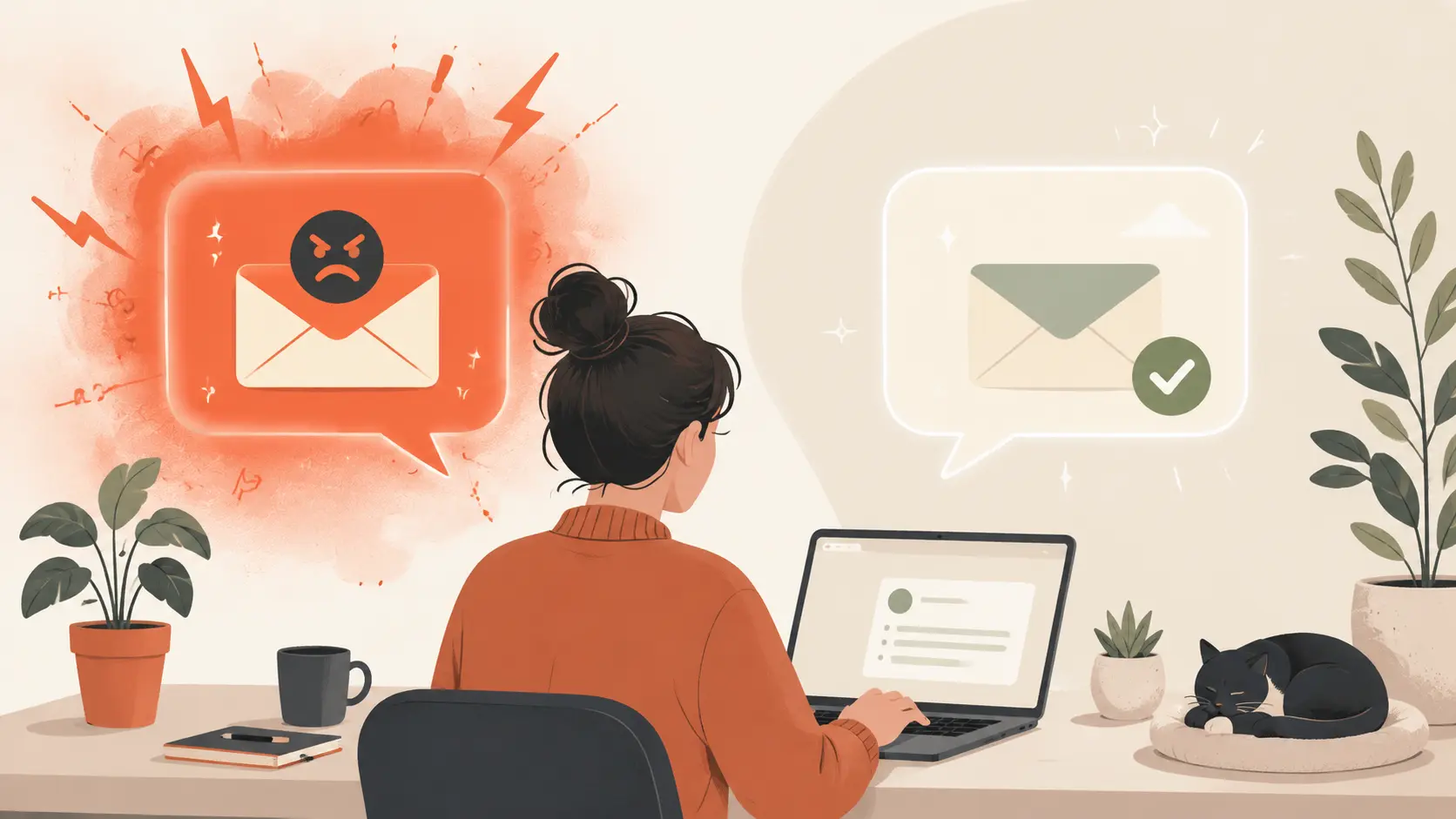


Tired of "I hope this email finds you well"? 25 better, copy-paste email openers for warm, formal, direct and cold-outreach messages - plus when the classic is fine.
bolt Quick answer
The best alternative to “I hope this email finds you well” is a specific, relevant line: reference their recent news, thank them for a real interaction, or simply get to the point. “Hope the launch went well” or “Quick one for you” both beat the autopilot pleasantry that everyone writes and no one reads. Below are 25 openers, sorted by who you're writing to.
“I hope this email finds you well” is the filler phrase of professional email. Everyone writes it, no one reads it, and it says nothing. It isn't wrong, exactly - it's just invisible. Below are 25 openers that actually earn their place, grouped by your relationship with the reader: warm, formal, straight-to-the-point, and cold outreach. Every one has a copy button.
The point isn't to sound clever - it's to sound like a person who noticed who they were writing to. A good opener is relevant, specific, and intentional. If you've got a genuine detail to reference, use it; if you don't, a short honest line beats a hollow one. And if the tone still isn't landing, paste the whole thing into the professionally-say approach and rework it.
When “I hope this finds you well” is actually fine
Let's be fair to the old workhorse. It isn't banned - it's a perfectly neutral, inoffensive open for a formal email to someone you don't know, where warmth would feel forced and bluntness would feel cold. The problem is using it on autopilot for everyone, including the colleague you spoke to an hour ago. Match the opener to the reader, and even the classic has its place.
Want your whole email to read better, not just the first line?
Paste it into the Grammar & Tone Fixer and get a clearer, warmer version back in seconds - opener included.
Reference something specific (the strongest openers)
A relevant, specific opener beats every generic pleasantry. If you know one real thing about their week, lead with it.
Hope the [launch / trip / move] went well.
Congratulations on [recent news] - well deserved.
Great to see [company/team] in the news recently.
Thanks again for [the call / your help last week].
Hope you enjoyed [the weekend / the break].
Warm but light (nothing specific to reference)
For people you know when you've no news to hook onto. Friendly, brief, and genuine.
Hope you're doing well.
Hope your week's going smoothly.
Hope all's good on your side.
Good to be back in touch.
Hope you're keeping well.
Straight to the point (skip the pleasantry)
Sometimes the most respectful opener is no opener. Getting to it signals you value their time.
Quick one for you -
Following up on [topic] -
I'll keep this brief:
Wanted to flag [thing] before it slips.
Two quick things:
Formal and professional
For senior, external, or first-time-formal contacts where a little polish is expected.
Thank you for your time on [date/topic].
I hope this note reaches you at a good moment.
I'm writing to you regarding [matter].
Thank you for the opportunity to [connect / apply / discuss].
It was a pleasure meeting you at [event].
Cold outreach and first contact
When they don't know you, honesty and specifics beat forced warmth every time.
You don't know me, but [one-line reason you're writing].
I came across [their work/company] and had to reach out.
I'll be upfront about why I'm emailing:
We haven't met, but [mutual connection / shared context].
Apologies for the cold email -
Openers that are worse than the cliche
Some “alternatives” miss because they add friction instead of removing it. Skip these.
- “I hope you're well in these [uncertain / challenging] times.” Dates instantly and adds a vague heaviness nobody asked for.
- “Happy [day of the week]!” Forced cheer that reads as a mail-merge, not a person.
- “I know you're busy, so…” Well-meant, but it plants the idea that your email is a burden before they've read it.
- “Per my last email…” Technically an opener, quietly hostile. If you're chasing, just re-state the ask warmly.
- A joke to a stranger. Humour needs shared context. With someone who doesn't know you, it usually lands as trying too hard.
Not sure which opener fits?
Tell the Grammar & Tone Fixer who you're writing to and it'll set the tone for you - warm, formal, or straight to the point.
For more workplace wording, see our guides on how to professionally say (almost) anything, how to respond to a rude email, and how to politely decline an email.
Frequently asked questions
What can I say instead of "I hope this email finds you well"?
Lead with something specific: reference their recent news ("Hope the launch went well"), thank them for a real interaction, or simply get to the point ("Quick one for you"). A relevant, intentional opener beats the generic pleasantry everyone writes. If you have no detail to reference, a short "Hope you're doing well" is honest and fine.
Is "I hope this email finds you well" unprofessional?
No, it's not unprofessional, just overused and largely invisible. It's a perfectly neutral open for a formal email to someone you don't know. The issue is using it on autopilot for everyone, including people you spoke to an hour ago, where a specific or direct line would land better.
How do you start a professional email?
Match the opener to the reader. For someone you know, reference something specific or keep it warm and brief. For a formal or senior contact, a line like "Thank you for your time on [topic]" works. When in doubt, get to the point - a clear first sentence respects everyone's time.
What's a good opening line for a cold email?
Honesty beats forced warmth. Try "You don't know me, but [one-line reason you're writing]", "I came across [their work] and had to reach out", or "I'll be upfront about why I'm emailing". A specific, direct cold open respects a stranger's time and gets read.
Should you skip the pleasantry in an email?
Often, yes. If you've no genuine detail to reference, getting straight to the point is more respectful than a hollow greeting. Openers like "Quick one for you" or "Following up on [topic]" signal that you value the reader's time, which lands better than filler.
What's a good email opener for someone you don't know?
Be specific and honest. Reference why you're reaching out, mention any shared context or connection, or acknowledge the cold contact directly ("Apologies for the cold email"). Forced familiarity reads as a mail-merge; a genuine, specific line reads as a person worth replying to.